

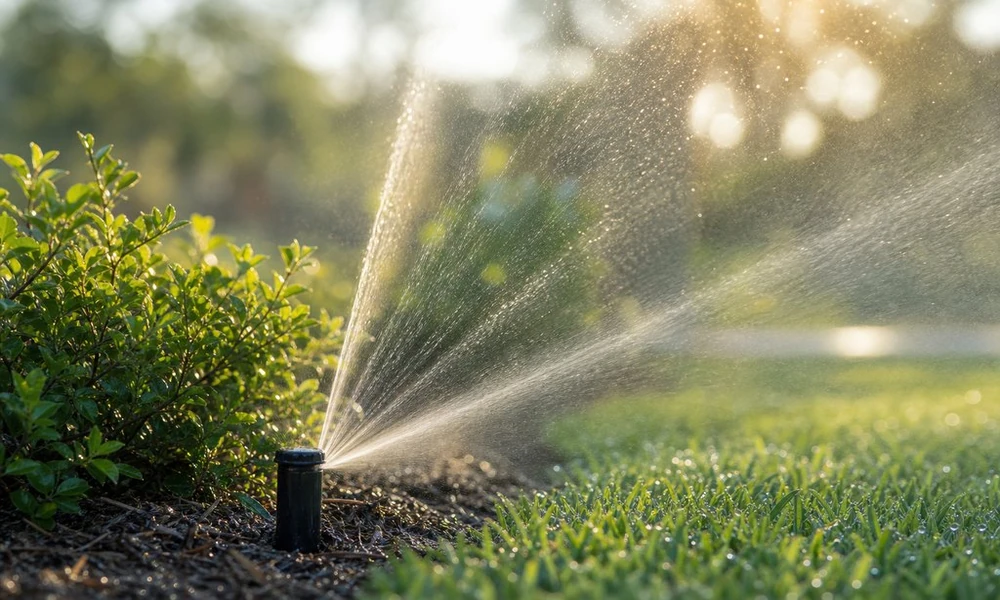
Sprinkler systems that deliver water unevenly, spray hard surfaces, or apply more moisture than the soil can absorb wastewater by watering locations that don’t need it, or by creating soggy locations while dry and brown areas still lack adequate moisture.
Inconsistent sprinkler coverage is common cause of an inefficient sprinkler system. To compensate for dry brown spots, many people run their entire system longer, thinking this will solve their brown spot problem. In reality, this doesn’t fix the original problem, it simply creates others by overwatering locations that originally had adequate moisture.
Even Coverage Prevents Overwatering
Sprinkler heads should be located to provide even coverage. Turf areas in particular benefit when sprinklers are spaced so the spray from adjacent sprinklers slightly overlap each other. This delivers a more even amount of moisture throughout the watering area.
It’s more important to have consistent, even coverage than it is to have powerful coverage. Evenly watered turf can be irrigated on a shorter more consistent schedule. Roots don’t get inundated with water forcing the roots to remain close to the surface instead of growing deeper and healthier.
Zones Should Match Soil and Plant Needs
Different plants need different amounts of water, and some do better with different watering techniques. It doesn’t make sense to water flowers and shrubs with the same method and frequency as the lawn.
Sprinklers that adequately water turf areas are not ideal for planting beds and drip irrigation usually isn’t practical in turf areas. Overspray from lawn sprinklers is wasted in the hot sun or wafted away on even the slightest of breezes.
Lay out an irrigation system design with separate zones for different watering needs. For example:
- All turf areas with similar watering needs on rotor or spray sprinkler zones
- Shrubs on drip irrigation
- Vegetable gardens on drip irrigation
- Foundation plantings on drip irrigation
- Established trees that need less water on their own lower volume watering zones
- Full sun areas separate from shaded areas that need less frequent or shorter duration watering
With a zoned irrigation system it’s easier to water grass and plantings according to their needs. You also won’t have one brown spot in the grass determining how much the entire yard is watered. And, seasonal adjustments to watering will be easier to make on just one or two zones instead of the entire yard. Get more helpful tips here.
The team at Moore Irrigation Services works with those same zoning and coverage considerations.
Hardware and Controls Complete the System
- Rotor sprinklers are ideal in open turf areas where larger areas need to be covered and it’s advantageous to apply the water slower.
- Spray heads are more effective in smaller areas. Run these for longer durations at your peril since more water applied faster often leads to runoff.
- Drip emitters are ideal for many planting areas, particularly when foliage shouldn’t be wet or moisture is most effective when delivered closer to the root system.
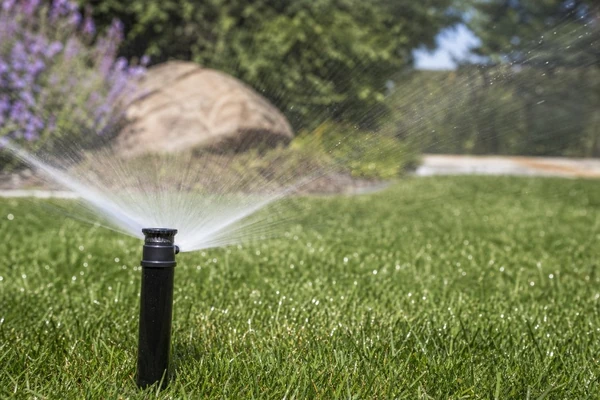
The diameter of the pipes, and the type and size of valves, nozzles and other equipment will also come into play. All should be sized appropriately to provide proper coverage at the desired pressure. Too much pressure turns droplets to a fine mist blown away on the breeze while too little pressure can cause less than desirable spray patterns and overall coverage.
Before any digging or trenching a practitioner should make sure where underground utilities have been marked and adhere to required separations between irrigation system and utility lines. This can sometimes influence the irrigation layout including where lines, valves and controller wire can go.
If your existing system provides good coverage, just not one busted sprinkler head or a single clogged nozzle, it’s probably not necessary to redesign and replace the entire system.
Even the best designed and professionally installed sprinkler system won’t function at its most effective potential if it isn’t used properly. It helps to have a smart controller and program it so it can accommodate weather changes. If the system was dialed in during a hot spell it may be over watering the landscape when temperatures dip. A smart controller allows for easier adjustments. Some even have rain and soil moisture sensors that shut off the system after adequate rainfall or skip irrigating locations with ample moisture.
A smart controller is no replacement for visually inspecting a functioning irrigation system a couple times each watering season. Make a lap around the home, commercial building, or property observing where water is going and looking for overspray onto sidewalks, driveways or patios, busted or leaking sprinkler heads, clogged nozzles, dry spots in the landscape, and other problems. Pay attention to the entire cycle before making run time adjustments. You may discover certain locations receiving too little or too much water or watering pavement that doesn’t need irrigation.
If the above recommendations have been incorporated into an irrigation system design the end result is efficient watering. Plants get watered as needed and little moisture is wasted on sidewalks, blown away into the neighbor’s yard, or soaking into the earth faster than the soil can absorb it.
