

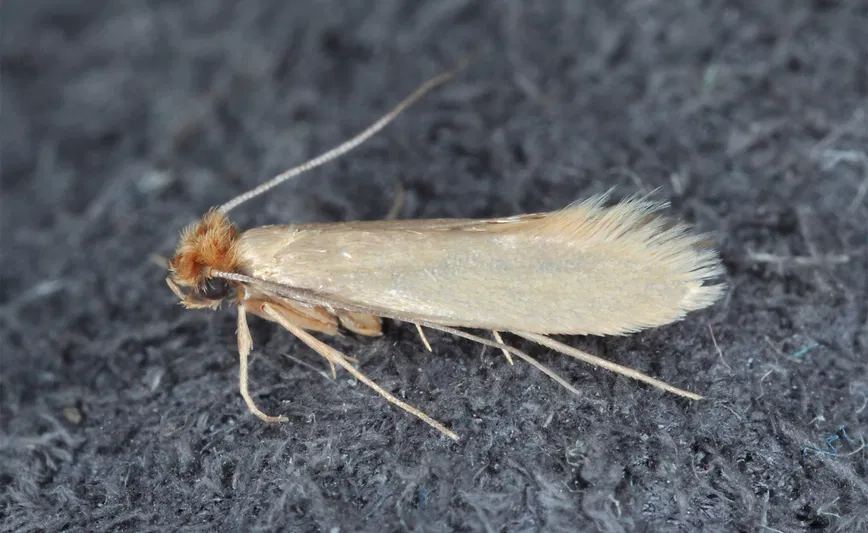
Most people assume that finding a moth in their closet just means there are a few moths around. What it usually means is that there’s already a hidden population of larvae eating your clothes. You need a real plan for how to get rid of moths in close [sic] before your favorite sweaters are full of holes.
Here’s the thing most moth-removal advice gets wrong: killing the moths you see does almost nothing. Adult moths don’t eat fabric. The larvae do — and they’re invisible, hiding in the darkest corners of your closet, inside folded clothes, along seams and cuffs, and deep in natural fiber garments. To actually get rid of moths, you have to go after the eggs and larvae, not just the adults.
Understanding the Enemy First
There are two main types of clothes moths:
| Type | Appearance | Behavior |
| Webbing clothes moth | Small, golden-beige, about 1/2 inch | Most common; leaves silky webbing on fabric |
| Casemaking clothes moth | Similar but carries a portable case | Less common; larvae travel in a visible tube |
Neither type is attracted to light — they prefer dark, undisturbed areas. Adult moths live only 2–4 weeks. In that time, females lay up to 200 eggs directly on natural fibers.
What they eat: Wool, cashmere, silk, cotton, linen, feathers, fur. Synthetic fabrics are generally safe — unless they have natural fiber blends or are soiled with body oils or food.
Step 1 — Find the Source
Before treating anything, locate where they’re concentrated:
- Check dark, undisturbed areas first: The back of shelves, floor corners, under furniture
- Look at natural fiber garments: Inspect wool sweaters, cashmere, silk, and linen carefully — especially seams, cuffs, and folds
- Check stored items: Boxes of off-season clothing, blankets, vintage items
- Look for signs: Irregular holes in fabric, silky webbing, small grain-like eggs, or tiny larvae (cream-colored, about 1cm)
| Sign | What It Means |
| Irregular holes in wool or cashmere | Larval feeding damage |
| Silky webbing on fabric | Webbing clothes moth larvae |
| Small cream-colored grubs | Active larvae — infestation confirmed |
| Small golden-beige moths flying near closet | Adult moths present |
Step 2 — Remove and Treat All Clothing
This is the most important step and the one most people skip because it’s labor-intensive.
Everything comes out of the closet. Every item.
For each garment:
- Inspect carefully — check all seams, folds, and hidden areas
- Wash anything washable in hot water (130°F / 55°C kills all life stages: eggs, larvae, and adults)
- Dry clean natural fibers that can’t be washed in hot water
- Freeze what can’t be washed or dry cleaned: Seal in a plastic bag and place in the freezer for at least 72 hours — this kills eggs and larvae effectively
Step 3 — Deep Clean the Closet
With everything removed:
- Vacuum thoroughly — every corner, every shelf edge, the floor, and the walls. Use a crevice attachment along baseboards and in corners.
- Empty and dispose of the vacuum bag immediately — outside the home. It contains eggs that will hatch.
- Wipe down all surfaces with a cloth dampened with white vinegar — moths dislike the acidity and it kills surface eggs.
- Steam clean shelves and floor if possible — steam at 120°F+ kills all moth life stages on contact.
Step 4 — Use Targeted Treatments
Cedar (Repellent, Not Killer)
Cedar contains oils that repel adult moths — but only fresh cedar. Cedar blocks, hangers, and balls lose potency within a few months and need to be sanded or re-oiled regularly to remain effective.
Bottom line: Cedar is a useful preventive measure, not a cure for an active infestation.
Moth Traps (Pheromone-Based)
Sticky pheromone traps attract and catch adult male moths, breaking the breeding cycle. Brands like Moth-Prevention and Zero In make specifically designed closet traps.
How they work: Male moths are drawn to synthetic female pheromones, get stuck, and can’t breed. Effective for monitoring and reducing adult populations.
Place them: At the back of shelves, on the closet floor, near the most affected items.
Lavender Sachets
Lavender repels adult moths and is a good preventive option for maintained closets. Like cedar, lavender isn’t strong enough to eliminate an active infestation — but it’s a great ongoing deterrent. Refresh sachets every few months or when the scent fades.
Insecticide Sprays (For Active Infestations)
For a confirmed, active infestation that hasn’t responded to other methods, a permethrin-based spray applied to closet surfaces (not directly on clothing) can kill larvae on contact.
- Apply to closet walls, shelves, and floor — not to garments
- Allow to dry completely before returning clothing
- Re-apply after 4–6 weeks to catch any newly hatched eggs
Step 5 — Return Clothing With Prevention in Mind
When putting clothing back:
| Prevention Method | How to Use |
| Cedar blocks or hangers | Place near natural fiber garments; sand every 6 months |
| Lavender sachets | Tuck between folded items; refresh every 3 months |
| Pheromone traps | Keep one in the closet permanently as a monitor |
| Garment bags | Store valuable woolens and cashmere in sealed bags |
| Vacuum storage bags | Best protection for seasonal items |
Common Mistakes That Keep Moths Coming Back
- Only killing adult moths — adult moths don’t eat fabric; larvae do. Killing adults without addressing eggs and larvae means the cycle continues.
- Not treating all clothing — one missed heavily-infested sweater reseeds the entire closet.
- Not cleaning the closet itself — eggs in corners and on shelving survive if the space isn’t thoroughly cleaned.
- Putting old cedar in and expecting it to work — cedar must be fresh and fragrant to repel moths. Old, odorless cedar does nothing.
- Storing dirty clothes — moths are specifically attracted to garments with body oils, sweat, and food residue. Always clean before long-term storage.
When to Call a Pest Control Professional
Consider professional treatment if:
- The infestation is severe and has spread beyond the closet
- You’ve followed all steps and moths keep returning
- You have a large number of valuable natural fiber items at risk
- Larvae or damage is found in carpets, upholstery, or wall-to-wall areas
Bottom Line
Getting rid of closet moths requires a full reset: removing and treating every item, deep cleaning the space, and then maintaining prevention measures going forward. The pheromone traps are the most underrated tool — keep one in your closet permanently as an early warning system. And remember: the moths you see aren’t the problem. The eggs and larvae you can’t see are. That’s where to direct your effort.
