

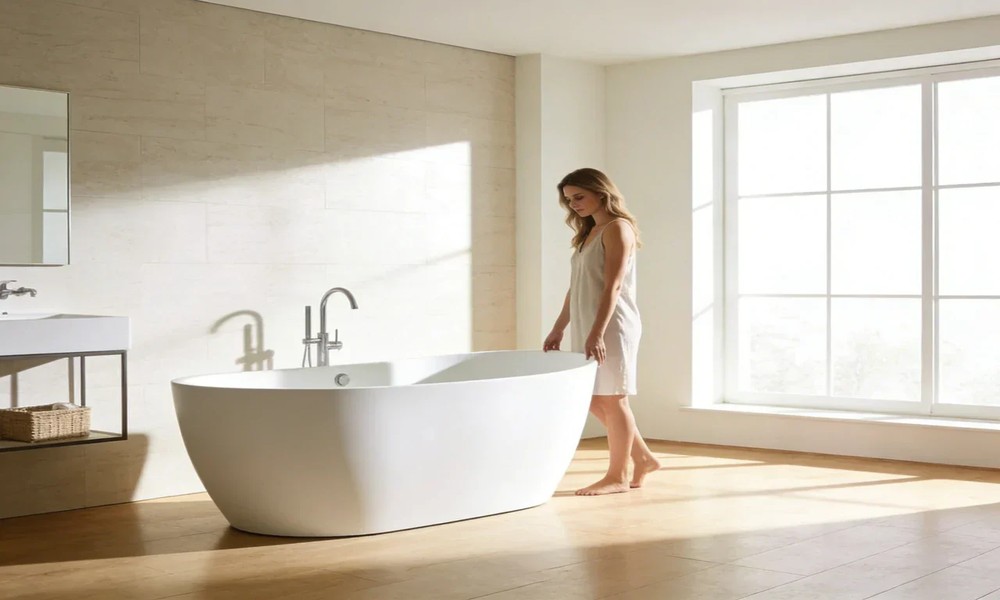
Forget everything you think you know about freestanding bathtubs. Too big, too expensive, impractical for modern homes, these are myths that still linger, but reality is a lot more nuanced. If you’re considering a bathroom upgrade, it’s worth asking: do these statement pieces really fit your needs, your space, and your style? Here’s what you really need to know.
Myth 1: Freestanding Bathtubs Require Excessive Space
It’s easy to assume that a freestanding tub belongs only in sprawling bathrooms, but today’s models prove otherwise. Standard widths often start at just 60 inches, which is roughly the same as many alcove tubs. In fact, compact designs let you enjoy the look, even in urban condos or small family bathrooms.
Placement plays a pivotal role. Center-stage in a large space brings drama, but tucking your tub near a window or wall maximizes flow in tight quarters. Creative layouts, like diagonal placement or pairing with a floating vanity, can turn awkward spaces into inviting retreats.
Myth 2: Freestanding Bathtubs Are Difficult to Install
Some homeowners imagine that installing a freestanding tub is an ordeal, but the basics are straightforward, especially if your plumbing is already set up for a bathtub. Installation usually involves leveling the tub, securing the drain, and connecting the water supply. Many modern tubs use flexible drain assemblies that simplify the process.
However, plumbing accessibility can influence the complexity. If your drain needs relocation, or you want floor-mounted fillers, some extra work may be required. For most DIYers, basic installs are manageable, but for older homes or significant rerouting, calling a professional is a smart investment. The peace of mind (and a drip-free bath) is worth it.
Myth 3: Freestanding Bathtubs Are Too Expensive for Most Budgets
Luxury often comes to mind when people picture a freestanding tub, but there’s a surprising range of options. Acrylic models, like those featured at Golden Elite Deco, come in at under $900, on par with many built-in tubs and far from the exclusive price tag many expect.
Let’s break down the key cost factors:
| Type | Typical Material | Price Range | Key Features |
|———–|——————|————–|—————————|
| Alcove | Acrylic, Fiberglass | $600 – $900 | Built into three walls |
| Freestanding | Acrylic | $700 – $900 | Flexible placement, design focus |
| Cast Iron Freestanding | Cast Iron | $1,500+ | Heavy, holds heat well |
Acrylic remains the most budget-friendly without sacrificing style or durability. Brands like Golden Elite Deco balance design, practicality, and affordability, showing that freestanding tubs have mainstream appeal.
Myth 4: Freestanding Bathtubs Are Hard to Maintain
Caring for a modern freestanding tub is no more complicated than any other bath fixture, sometimes, it’s even easier. Acrylic surfaces resist staining, are lightweight, and just need a mild, non-abrasive cleaner for regular upkeep.
To keep your bath looking pristine, avoid harsh chemicals and always rinse away soap residue. For scratches, simple polishers restore shine. Ensuring proper ventilation prevents mold or mildew, especially around the base where moisture might linger. With routine attention, your tub can look showroom-new for years.
Myth 5: Freestanding Bathtubs Don’t Offer Comfort or Functionality
Think comfort is sacrificed for looks? Not anymore. Ergonomic designs with sloped backs and integrated armrests offer deep-soaking relaxation that rivals any built-in. Features like centered drain placement and discreet overflow channels add convenience, preventing awkward stretching or splashing.
Compare soaking in a freestanding tub versus a built-in, and the difference is striking: you get more space to stretch out, no confining walls, and a spa-like experience, even in a modest bathroom.
Myth 6: Freestanding Bathtubs Clash with Modern Bathroom Styles
Today’s freestanding tubs are anything but out of place in sleek, contemporary homes. Their sculptural forms actually elevate minimalist spaces, while gentle curves or bold black-and-white finishes bring instant personality. The trend leans toward mixing materials, think acrylic tubs with matte black fixtures or warm wood vanities, creating a cohesive, curated look.
Designers increasingly feature freestanding tubs as the visual anchor in both classic and cutting-edge bathroom transformations. There’s no rulebook: symmetry, asymmetry, and even unexpected placements all work with a thoughtful approach to scale and finish.
Making the Right Choice: Is a Freestanding Bathtub Right for Your Bathroom?
Selecting a bathtub is about balancing needs, space, and style. Start by measuring your bathroom carefully (including doorways and pathways) and considering your daily routines. Are long soaks a must, or are you after quick, practical showers? Your budget matters, but material and maintenance should factor into your decision.
Ask yourself:
– How much space can I dedicate to a tub?
– What level of maintenance am I willing to commit to?
– Do I want a statement piece or something that blends in?
– Does my existing plumbing support easy installation?
In the end, freestanding bathtubs offer a flexible, stylish, and surprisingly practical solution for a wide range of homes. When chosen carefully, they deliver both beauty and comfort, proving that the myths simply don’t hold water.
