

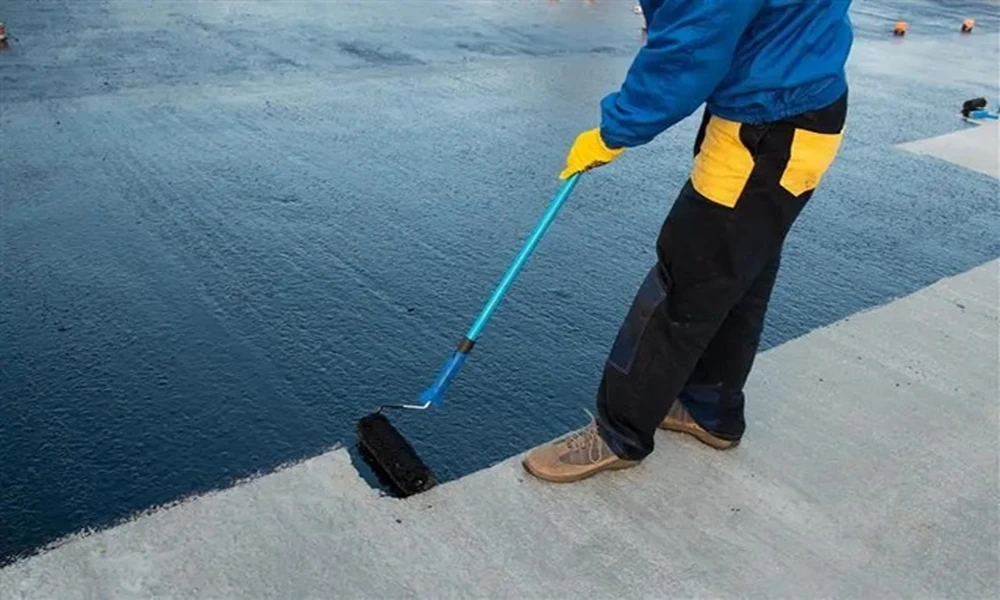
A roof takes more punishment than any other part of a building. It absorbs direct sun for hours, cools rapidly during afternoon storms, sheds heavy rainfall, and does all of it continuously for years without anyone looking at it. The membrane that keeps water out is working against thermal movement, UV degradation and standing water simultaneously. Choosing the right waterproofing for roofs, and maintaining it sensibly, determines whether it lasts five years or twenty.
What a Roof Membrane Is Up Against
Ultraviolet radiation is the primary enemy of most materials, breaking down polymers and causing surfaces to chalk, harden and crack. Temperature swings between a hot surface at midday and rapid cooling during rain cause repeated expansion and contraction, which fatigues any layer that cannot stretch. Ponding water on flat or poorly graded roofs applies constant hydrostatic pressure and accelerates degradation wherever it sits. Add foot traffic from maintenance visits, plant equipment vibration and the occasional falling debris, and the demands become clear.
Liquid-Applied Membranes
Polyurethane and acrylic liquid systems are applied by roller or spray and cure into a continuous seamless layer. Their strongest advantage is exactly that seamlessness with no joints or laps, the most common failure points simply do not exist. They conform easily to irregular shapes, upstands, pipe penetrations and plant plinths, which makes them well suited to roofs cluttered with services. Polyurethane offers high elasticity and handles movement well; acrylic is more economical and reflective but less tolerant of ponding. Both need careful surface preparation and correct film thickness, since under-application is the usual cause of premature failure.
Torch-Applied Bituminous Sheets
Modified bitumen sheets are unrolled and bonded with a gas torch, producing a thick and physically robust barrier. They perform strongly on large uninterrupted areas and resist mechanical damage better than most liquid systems. The trade-off is joints, every overlap is a potential weak point, and quality depends heavily on the installer’s workmanship at seams and upstands. Hot works also require fire safety precautions and are sometimes restricted in occupied buildings. Where a roof is large, simple in shape and accessible, this remains a durable and cost-effective choice.
Cementitious and Crystalline Treatments
Cement-based coatings bond directly to concrete and are often used on accessible RC decks, particularly beneath tiled finishes. They are economical and easy to apply but relatively rigid, so they suit substrates with minimal movement. Crystalline treatments take a different approach entirely, penetrating the concrete and forming crystals within its capillary structure to block water movement from within the material rather than sealing the surface. Because the protection lives inside the slab, it is not damaged by surface abrasion or UV exposure, which makes it useful where a wearing layer will be laid on top a combination contractors handling waterproofing in Singapore use regularly on accessible decks.
Matching the System to the Roof
The correct choice follows from how the roof is built and used. An exposed flat concrete deck with heavy sun needs UV stability and elasticity, favouring polyurethane. A roof carrying tiles or pavers can use a cementitious or crystalline base beneath the finish. A metal roof needs a system compatible with movement at fixings and laps. Roofs with numerous penetrations favour liquid systems for detailing ease. Substrate, exposure and intended use narrow the options considerably before price enters the discussion.
Drainage Is Half the Job
No membrane is designed to sit under permanent water, yet ponding is the single most common contributor to roof failure. Falls should direct water to outlets within a reasonable time after rain stops, and outlets need to be sized, positioned and kept clear. Blocked drains caused by leaves, sediment or building debris turn a functioning roof into a shallow tank. Where falls are inadequate from the original construction, a screed correction is often better value than repeatedly re-coating a surface that will keep failing. Any competent specialist will check drainage before recommending a membrane upgrade.
Detailing Around the Difficult Parts
Failures cluster at upstands, parapet junctions, drain outlets, pipe penetrations and expansion joints. Correct practice includes coving at internal angles, reinforcement at corners, dressing the membrane properly into drain bodies, and terminating upstands at an adequate height with a mechanically secured edge. Plant equipment mounted on the roof needs proper plinths rather than membrane laid straight under a steel frame. These details take a small share of the material cost and account for the large majority of leaks when neglected.
Repairing Rather Than Replacing
Not every roof problem needs a full re-covering. Where the membrane is generally sound but has failed at specific points, targeted repair is faster and considerably cheaper. Cracks in concrete can be sealed by resin injection, and localised membrane damage can be patched with compatible material. For buildings that must stay occupied, a dustless waterproofing approach avoids the demolition, debris and noise that a strip-and-replace project brings. Assessment should establish whether the failure is localised or systemic before deciding.
Inspection and Upkeep
An annual walk-over catches most developing problems while they are cheap. Look for cracking, blistering, chalking, lifted seams, sealant failure at upstands and standing water hours after rain. Clear drains and remove vegetation and debris. Recoating an exposed liquid membrane with a UV-protective layer partway through its life extends service substantially for a modest cost. Keep a photographic record so changes are visible year on year.
The Value of Getting It Right
A leaking roof damages far more than itself ceilings, insulation, electrical systems, stored goods and eventually the reinforcement in the slab. Compared with those consequences, specifying the correct system, detailing it properly and keeping the drains clear is a small and highly predictable investment.
