

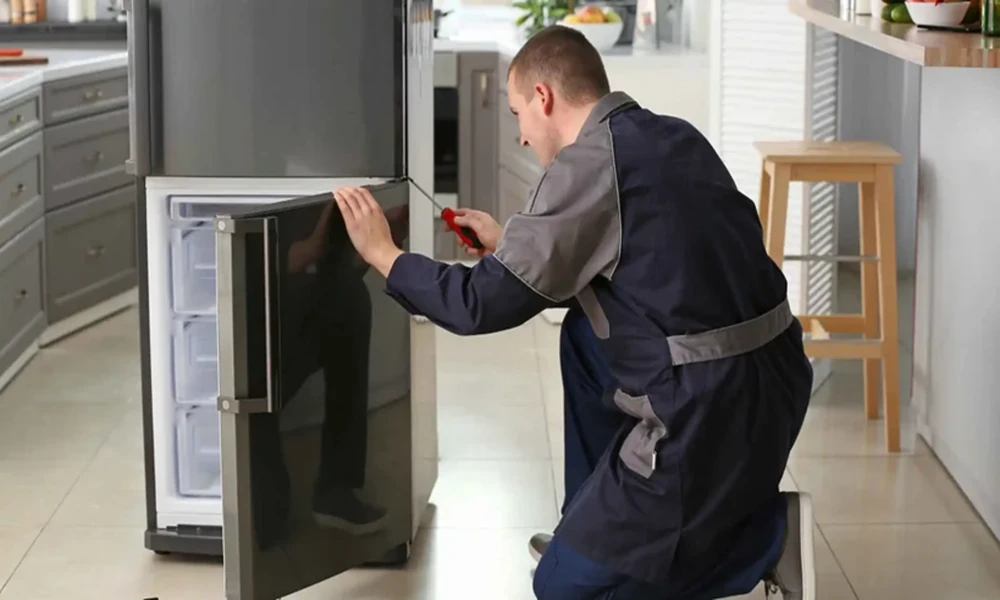
A refrigerator is one of the few appliances that runs continuously, day and night, for years without anyone thinking much about it, right up until it stops keeping things cold and suddenly becomes the most urgent problem in the house or kitchen. Because it works quietly in the background, most people only learn how a fridge actually functions once something goes wrong with it. Understanding the common failure points, and what each one usually signals, makes it easier to describe the problem accurately to a technician and to judge whether a repair is worth pursuing on an older unit, rather than guessing at causes over the phone and hoping the first fix attempted happens to be the right one.
The Fridge Runs But Won’t Get Cold Enough
This is one of the most frequent complaints, and it has several possible causes that aren’t always obvious from the outside. A condenser coil coated in dust and grease, usually at the back or underneath the unit, forces the compressor to work harder and can noticeably reduce cooling efficiency over time. A failing door seal that no longer forms a tight closure lets cold air escape constantly, which shows up as the compressor running almost nonstop without ever bringing the internal temperature down properly. Low refrigerant from a small leak somewhere in the sealed system is another common culprit, and unlike a dirty coil, this one requires a technician with the right equipment and certification to locate and repair safely. It’s also worth checking that vents inside the fridge compartment aren’t blocked by stored food, since overpacking a fridge can restrict internal air circulation enough to mimic a genuine mechanical fault.
Compressor Trouble and What It Sounds Like
The compressor is the heart of a refrigerator’s cooling cycle, and when it starts failing, the symptoms are usually audible before they’re anything else. A compressor that clicks repeatedly without starting, sometimes called short cycling, often points to a failing start relay or capacitor rather than the compressor itself, which is a comparatively affordable fix. A loud humming or grinding noise that continues while the unit runs suggests more serious internal wear, and in older units this can be a sign that a full compressor replacement is the only real fix, at which point the cost needs to be weighed honestly against the value of simply replacing the fridge.
Ice Buildup in the Freezer Compartment
A layer of frost or ice accumulating inside the freezer, particularly around the back wall, usually points to a defrost system fault rather than anything wrong with the compressor. Most modern fridges run an automatic defrost cycle on a timer, and when the defrost heater, timer, or thermostat controlling that cycle fails, ice builds up faster than it melts away. Left unaddressed, excessive ice buildup can block air circulation entirely, causing the fridge compartment to warm up even while the freezer stays cold, which is a confusing symptom that often gets misdiagnosed by anyone without repair experience.
Water Leaking Onto the Kitchen Floor
Water pooling underneath or in front of a fridge is unpleasant but usually traceable to one of a few specific causes. A clogged defrost drain, often blocked by food debris or a buildup of mineral deposits, is the most common source, and it causes melted frost to overflow inside the unit rather than draining away properly through the intended channel. Units with built-in water dispensers or ice makers add another possible leak point through cracked supply lines or a faulty water inlet valve. Diagnosing this correctly, rather than just mopping up the floor repeatedly, usually requires checking the drain pathway from the freezer compartment through to the drip pan underneath the unit, an area most households have never actually looked at. To get a proper diagnosis rather than guessing at causes, homeowners can arrange a professional fridge repair inspection that traces the water back to its actual source.
Unusual Smells Coming From Inside
A persistent odd smell that doesn’t go away after cleaning is sometimes more than a storage or spoilage issue. Mould growth in drain pathways or door seal gaskets, particularly in Singapore’s humid climate, can produce a musty smell that lingers regardless of how often the interior shelves are wiped down. In rarer cases, a burning or chemical smell can indicate an electrical component overheating or, in older units, a very small refrigerant leak, both of which warrant a technician’s attention rather than continued use.
Interior Light or Control Panel Malfunctions
Fridges with digital displays or interior lighting sometimes develop faults isolated to these components while cooling performance remains completely normal. A control panel showing an error code, or a display that flickers or stops responding to temperature adjustments, points to an electronic control board issue rather than a mechanical one. These faults are worth having checked promptly, since some control boards also govern defrost cycles and compressor timing, meaning a seemingly minor display glitch can eventually affect actual cooling performance if left unaddressed for too long.
Deciding Between Repair and Replacement
Once a fridge passes roughly eight to ten years of age, every repair decision comes with a background question of whether it’s still worth investing in the unit at all. A minor fix like a door seal or a defrost timer is almost always worth doing regardless of the fridge’s age, since the parts are inexpensive relative to the cost of a new unit. A major compressor failure on an older fridge is a different calculation entirely, and getting an honest assessment from a technician about the unit’s remaining lifespan, rather than just a repair quote, helps avoid paying for a fix that only buys a few more months before the next breakdown. It’s reasonable to ask directly whether the same fault is likely to recur soon on a unit of that age, since a technician who has serviced similar models will usually have a fair sense of what tends to fail next.
