

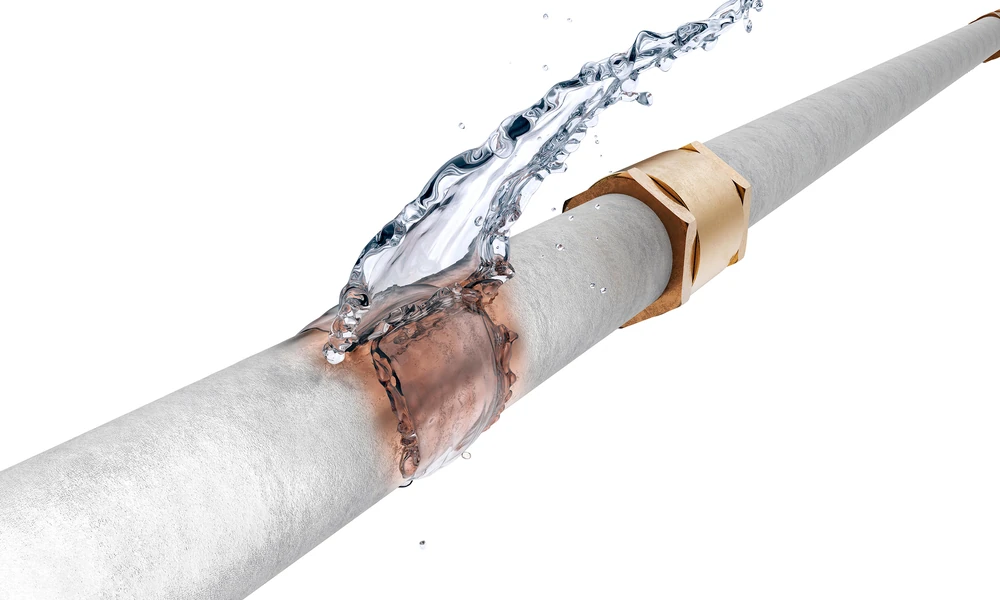
Most people imagine a frozen pipe splitting right where the ice sits. It’s an easy picture to believe, but it’s usually wrong. Ice inside a supply line works more like a plug than a bomb. The real damage tends to happen a few feet away, often inside a warm wall. That’s why so many winter leaks go unnoticed until a ceiling stains or a floor starts to cup.
Knowing how this works changes the way you protect a house in cold weather. It also explains why a pipe can look fine one evening and spray water across the kitchen the next morning, just as the temperature finally starts to rise.
After a freeze, the cost depends less on the broken pipe and more on how far the water spreads before anyone notices. Crews at Restoration Resource, a locally owned restoration company serving Pasco and the Tri-Cities around the clock, record moisture readings, photos and the affected square footage on every job. That record often matters long after the pipe itself is fixed. Before any of that, it helps to know what actually happens inside the line.
The Pressure Problem Inside a Frozen Line
Water expands by about nine percent as it turns to ice. When one section of pipe freezes, the ice locks in place and seals the line. Water is still trapped between that ice plug and the closed faucet at the end of the run. As more ice forms, it pushes against the trapped water, which can’t compress.
Pressure in that short stretch can climb far past what the pipe was built to handle. Eventually something gives, and it usually gives in the section with no ice at all. Copper tends to split along its length. PEX tubing stretches better, but the fittings that join it often crack instead.
Here is the sequence most homeowners never see:
- A cold snap chills a pipe running through an exterior wall, crawl space or garage.
- Ice forms at the coldest point and seals the line.
- Pressure builds between the ice and the nearest closed fixture.
- The pipe or a fitting splits downstream, sometimes inside a heated room.
- Nothing leaks yet, because the ice is still blocking the flow.
- The ice melts, full water pressure comes back, and the crack starts spraying.
That last step is why burst pipes so often show up on the first mild afternoon after a deep freeze.
Where Freezing Usually Starts
Some parts of a house carry more risk than others. Pipes along exterior walls, especially behind kitchen and bathroom sinks, sit close to the cold with little insulation between them and the siding. Crawl spaces with open vents or torn insulation leave long runs of supply line exposed. Attached garages, attics and unheated laundry rooms round out the usual list.
Wind matters as much as temperature. A steady cold wind finds small gaps around a rim joist, a dryer vent or a pipe opening and blows freezing air straight onto a line that would otherwise be safe. A pipe can freeze on a night that doesn’t feel especially cold if a draft hits it directly.
The hose bib trap. Frost-proof outdoor faucets have a long barrel that shuts the water off inside the warm part of the house. They work well, but only when the garden hose is disconnected. A hose left attached traps water in the barrel, and that water freezes and splits the barrel inside the wall. Nothing happens all winter. The leak appears the first time someone turns on the spigot in spring, and by then water is running into the basement or crawl space instead of the yard.
Small Habits That Keep Water Moving
Preventing a freeze comes down to warmth and movement. Moving water resists freezing, and warm air protects pipes in tight spaces.
Opening the cabinet doors under sinks on exterior walls lets heated room air reach the plumbing. A slow drip from a faucet on a vulnerable line keeps water flowing and relieves pressure if ice starts to form. Keeping the thermostat steady overnight instead of dropping it several degrees costs a little more to heat. It saves far more in repairs you never have to make.
Insurance adds a practical reason to keep up these habits. The National Association of Insurance Commissioners notes that homeowners policies generally cover sudden and accidental plumbing discharges. Many policies also expect the home to stay at a minimum temperature, or the water to be shut off when the house sits empty. Skipping those basics can turn a covered loss into one you pay for yourself.
Before the first hard freeze, disconnecting hoses, wrapping exposed crawl space pipes in foam sleeves and sealing gaps where lines pass through exterior walls handle most of the risk. It’s also worth finding the main water shutoff and checking that it still turns. A valve that hasn’t moved in ten years can seize just when you need it.
When a Pipe Has Already Frozen
If a faucet slows to a trickle or stops during a cold spell, there’s probably ice somewhere in that line. Leave the faucet open so melting water has somewhere to go. Warm the suspect section gently with a hair dryer, warm towels or a space heater kept at a safe distance. Open flames and torches are a fire risk and can ruin the pipe, especially plastic lines.
Check the other fixtures in the house as well. If one pipe froze, others in similar spots may be close behind.
The Hours After a Burst
Once water is flowing, speed matters. Shutting off the main valve stops the flow. If water has reached outlets, light fixtures or the area near the electrical panel, stay clear. Only switch off power at the breaker if you can reach it from a dry spot.
Photos and video taken before anything is moved will help with the insurance claim. So will an early call to the insurer, ideally before any major repairs begin.
The hardest part of water damage is the part you can’t see. Drywall wicks water upward. Insulation inside wall cavities holds moisture for days. Subfloors under vinyl plank or tile stay wet long after the surface looks dry. Mold can start growing on damp building materials within a day or two, so running fans over the surface rarely fixes the problem. Moisture meters and thermal cameras show where the water has traveled. Sometimes opening a wall or pulling baseboards is the only way to dry a cavity properly.
Reading the Fine Print Before Winter
Water damage coverage isn’t always as broad as people assume. Washington’s Office of the Insurance Commissioner has warned homeowners to check for water damage sublimits. These cap what a policy pays for a burst or leaking pipe well below the home’s overall coverage. A sublimit lowers the premium, but a single burst line behind a finished wall can use it up quickly.
Ten minutes with your declarations page, or a short call to your agent, will tell you where you stand. Put that together with a heated house, open cabinet doors on the coldest nights and a hose that comes off in the fall, and most homes get through winter without a problem. The ones that don’t usually got caught by a hidden detail, like a pipe in an outside wall, a draft through the crawl space or a spigot nobody thought about until spring.
