

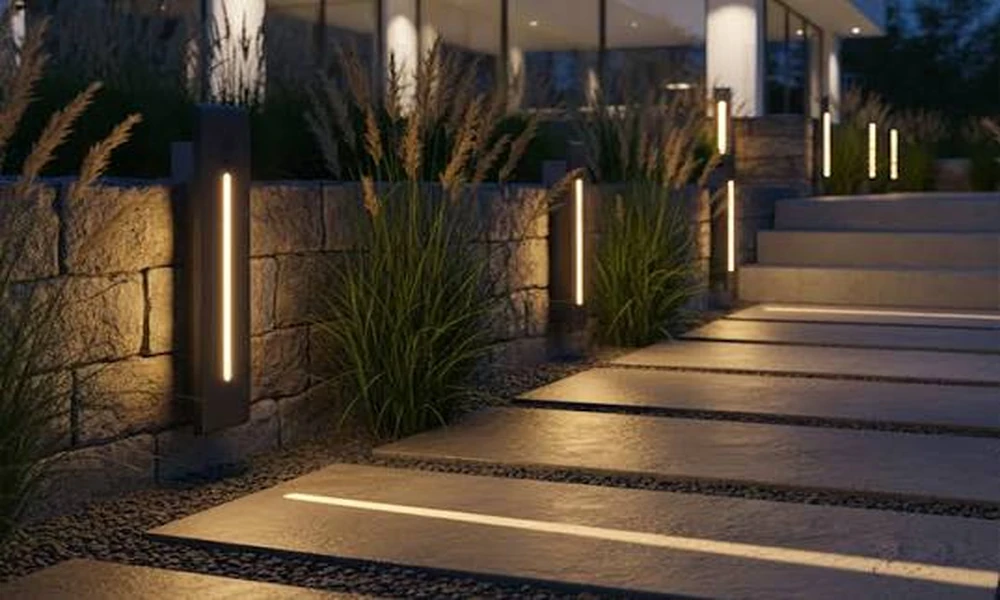
Outdoor lighting is usually the last thing people plan and the first thing guests notice. A porch that is too dim feels unwelcoming, a patio that is too bright feels like a parking lot, and a path with no light at all is simply a trip hazard. Getting it right is less about spending more and more about choosing fixtures with a clear job.
Start with the job each light has to do
Most yards need three layers.
- Safety lighting covers steps, walkways and entrances. It should be low, even and shielded so it lights the ground and not your neighbors’ windows.
- Task lighting supports activities such as grilling, dining or reading. Place it where people actually stand or sit, and keep it out of their eyes.
- Accent lighting picks out trees, textured walls or a favorite planting. A little goes a long way here.
Planning around these jobs keeps you from buying ten identical fixtures and wondering why the space still feels flat.
Materials and finish matter more outdoors
A fixture that looks great in a showroom can fail in one wet winter. Look for solid brass, aluminum with a powder-coat finish, or marine-grade stainless steel, and check the ingress rating. A wet-rated fixture is built for direct rain and spray, while a damp-rated one belongs under a covered porch. Black and bronze finishes hide wear well, and brass develops a patina many people like.
Mind the color of the light
Warm white bulbs in the 2200K to 3000K range flatter wood, stone and skin tones and are easier on the eyes at night. Cooler light can suit security areas, but it tends to make a garden feel clinical. Choose one color temperature for the whole space so the fixtures read as one design.
Shape the fixtures to the architecture
Traditional homes tend to suit lanterns and sconces with classic proportions. Modern homes often look better with clean, low-profile lines and downward-facing light. Size matters too: a wall light that is too small for a wide door looks lost, so aim for roughly a third of the door’s height for a pair of sconces.
Where to look for ideas
If you want a broader overview of styles, finishes and well-regarded makers, this guide to the best outdoor light fixtures and brands walks through options that suit different budgets and homes. It is a useful starting point before you narrow down what fits your own space.
A simple plan to follow
1. Walk the property at dusk and note where it feels unsafe or dark.
2. Mark the entry, steps, seating and any feature worth highlighting.
3. Pick one finish and one color temperature.
4. Choose fixtures rated for the exposure at each location.
5. Test with temporary lights for a few evenings before you install anything permanently.
Good outdoor lighting rarely draws attention to itself. It makes a home feel safer, calmer and more finished, and it lets you use the space for hours longer than daylight allows.
