

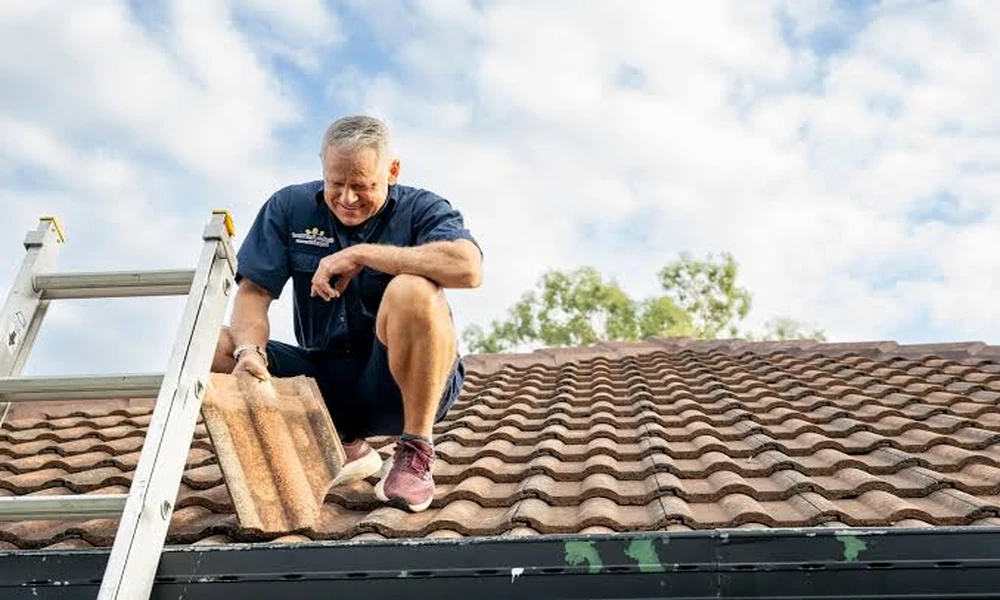
Roofs don’t usually fail overnight. They wear down bit by bit, storm after storm, until one day a homeowner’s stuck wondering: patch it again, or just replace the whole thing? It’s advisable to see website about the reasons behind the decision before making any choice, since guessing is always risky. Certain elements will usually solve the mystery much faster than just staring at the leak itself.
How Old Is the Roof, Really?
The average lifetime of asphalt shingle roofs ranges from 20 to 25 years, depending upon the quality of material and the amount of weathering. A roof beyond that period, even if it is weathered already, is not worth fixing anymore. On the other hand, young roofs are typically fine candidates for a repair.
Is the Damage in One Spot, or Everywhere?
A loose or damaged shingle, or a leak around a vent pipe, can easily be fixed. However, when there is damage occurring in multiple areas at once, such as curled shingles on one side of the roof, a leak by the chimney, and soft spots on the perimeter, it becomes clear that there are problems with the entire roof system.
What Does the Repair History Look Like?
A roof that’s needed three or four fixes over the last couple of years is basically talking. Constant repairs cost money, and eventually that math stops favoring another patch job. Homeowners unsure where things stand should see website about their roof’s repair timeline before signing off on yet another fix, since that pattern often says more than any single inspection would.
What’s Going On Structurally, Underneath It All
Sometimes the roof itself may not be the root cause. Water damage, decayed wood, and weakened support structures may well be the reason why what should have been an easy fix has become a serious job. If you find yourself in a situation where the roofline has begun to sag, or where your floor feels soft and spongy underfoot, then chances are good there is more to it than meets the eye.
Energy Efficiency and Airflow
Older roofs often don’t have the ventilation or insulation that newer materials come with standard. Homeowners dealing with rising energy bills or rooms that never feel quite right temperature-wise might be dealing with a roof that’s part of the problem. Replacing it opens the door to better materials and improved airflow, something no repair is really going to fix.
Making the Right Call
There’s no one-size-fits-all rule here. It comes down to age, how the damage is spread, how often repairs have happened, what’s going on structurally, and how efficient the roof still is, not just whatever the next fix costs. Looking at all of that together, instead of reacting to one bad leak, tends to lead to a smarter, more informed decision.
Stuck on what to do? Then a professional evaluation will be the best way to know what condition your roof is truly in. An inspector who can identify all the little signs that can easily be overlooked from down below can help make the right choice clear.
